How professionals handle contaminated household waste safely
Contaminated household waste is one of those things people often ignore until it becomes awkward, smelly, or frankly unsafe. A cracked bleach bottle in the utility cupboard, food-soaked packaging after a pest issue, broken glass mixed with general rubbish, used needles found during a clear-out, or mouldy bedding from a damp room all need more care than a normal bin collection. So how professionals handle contaminated household waste safely matters more than most people realise.
In practice, the job is not just about "taking rubbish away". It is about identifying the risk, separating items properly, containing them, moving them without spreading contamination, and making sure the final disposal route is appropriate. Done well, it protects people, property, and the environment. Done badly, it can turn a small household problem into a bigger mess very quickly.
This guide explains what professionals actually do, why it matters, and how you can judge the right approach whether you are clearing a single room, handling a rental property issue, or sorting waste after a difficult home situation.
Table of Contents
- Why it matters
- How the process works
- Key benefits and practical advantages
- Who this is for and when it makes sense
- Step-by-step guidance
- Expert tips for better results
- Common mistakes to avoid
- Tools, resources and recommendations
- Law, compliance, standards, or best practice
- Options, methods, or comparison table
- Case study or real-world example
- Practical checklist
- Conclusion
- Frequently asked questions
Why How professionals handle contaminated household waste safely Matters
Contaminated waste is different from ordinary clutter because it can create health, hygiene, and handling risks. Some items are irritating rather than truly dangerous; others may carry biological contamination, chemical residue, sharps risk, or mould exposure. The key point is simple: you do not always know what you are dealing with just by looking at it.
Professionals approach this carefully because one careless lift, one torn bag, or one overfilled box can spread contamination to stairs, carpets, vehicle interiors, or your hands. That is the bit people forget. The risk is often not the item itself, but what happens while moving it.
There is also the practical side. Local authorities, landlords, letting agents, and homeowners all want waste removed in a way that is tidy, lawful, and not disruptive. If you are dealing with a loft clear-out, a post-tenancy clean, or a property with damaged food waste and broken household items, a structured process saves time and usually avoids that horrible "we'll have to redo this" moment.
To be fair, most household contamination cases are manageable when handled properly. But "properly" means more than chucking everything into black bags and hoping for the best.
How How professionals handle contaminated household waste safely Works
Professionals usually work in a sequence. First they assess the waste type, then they separate what can be handled as normal household rubbish from what needs extra care. After that comes containment, removal, cleaning of the area, and final disposal through the correct route.
The exact process depends on what is contaminated. For example, a bag of mouldy clothing is not handled the same way as a box containing broken glass and spoiled food, and neither is treated the same way as suspected sharps or chemical spill waste. That distinction matters more than people think.
In a typical safe-handling workflow, a trained team will:
- identify visible hazards before touching anything
- wear suitable gloves and other protective equipment where needed
- bag or containerise waste so it does not leak or fall apart
- keep contaminated items separate from clean items
- avoid compressing bags or boxes that may burst
- remove waste using a route that minimises contact with living areas
- clean and, where needed, disinfect the affected space
- dispose of waste using appropriate disposal channels
In real terms, that means someone clearing a basement after a damp problem may work differently from someone removing old mattress waste from a flat in London. One job may mainly involve safe lifting and odour control; another may require more strict separation and containment. Same broad principle, different execution.
Professionals also think ahead. Where will the waste go through the property? Does the lift need protecting? Is the refuse area accessible? Can the load be separated by category? If you have ever watched a good team work, it looks almost calm. There is a reason for that. They are reducing decisions on the spot.
Key Benefits and Practical Advantages
Using professional handling methods gives you more than convenience. It creates a safer and more predictable result, especially when the waste is awkward, heavy, smelly, wet, sharp, or mixed.
- Lower exposure risk: Less chance of touching contaminated surfaces, inhaling dust or mould, or puncturing bags with sharp items.
- Cleaner property outcomes: Better chance of leaving the home, hallway, or shared area in a usable condition.
- Better sorting: Recyclable or recoverable items are less likely to be thrown away unnecessarily.
- Reduced stress: When you are already dealing with a messy situation, having a method takes pressure off.
- More suitable disposal: Items that need special handling are less likely to end up in the wrong bin.
There is a quieter benefit too: confidence. If you are a landlord, homeowner, or family member sorting someone else's property, you want to know the job has been handled with care. That matters. People notice when a waste team leaves a space clean and safe instead of just empty.
Practical summary: safe contaminated waste handling is about control. Control over contact, odour, spread, access, sorting, and disposal. That is the whole game, really.
Who This Is For and When It Makes Sense
This service and this approach are useful for a wide range of situations. You do not need a dramatic incident for contaminated waste handling to make sense. In fact, small problems are where careful handling often saves the most trouble.
It is often relevant for:
- homeowners doing a deep clear-out after damp, pests, or water damage
- landlords and agents dealing with left-behind waste after a tenancy
- families clearing an inherited property with mixed and degraded contents
- people managing waste after illness, incontinence, or hoarding conditions
- anyone with broken household items mixed with food waste, liquids, or sharps
- households needing rubbish clearance or a broader clearance service where some items may be contaminated
It also makes sense when the waste is awkward rather than technically hazardous. A rotten fridge shelf, mouldy soft furnishings, or soiled bedding may not sound dramatic, but handling them badly is a fast way to spread odour and mess.
If you are unsure whether the waste is normal or contaminated, that uncertainty alone is a reason to slow down and separate it first. Better to pause for a minute than to clean the stairs twice. Let's face it, nobody wants that job.
Step-by-Step Guidance
Here is the practical version of how professionals handle contaminated household waste safely. This is the part most readers want: what actually happens, in order.
1. Inspect before you move anything
A trained person starts by looking for signs of contamination: leaks, mould, pests, broken glass, chemical containers, blood-like staining, strong odours, or damp patches. They also check the surrounding area, because contamination rarely stays neatly on one item.
This first look is important. Sometimes the worst item is not obvious until you move the top layer. A bag that looks ordinary can split and reveal old food, wet paper, or sharp fragments. Not ideal.
2. Separate waste into sensible categories
Professionals divide waste into categories so that different risks are handled differently. Typical groupings might include general household waste, soft furnishings, broken items, food-contaminated waste, sharps, and materials with visible chemical residue. If the waste stream is mixed, they separate as much as possible before loading.
That sorting stage often saves disposal cost and reduces contamination spread. It also makes the rest of the job more manageable.
3. Use appropriate protective gear
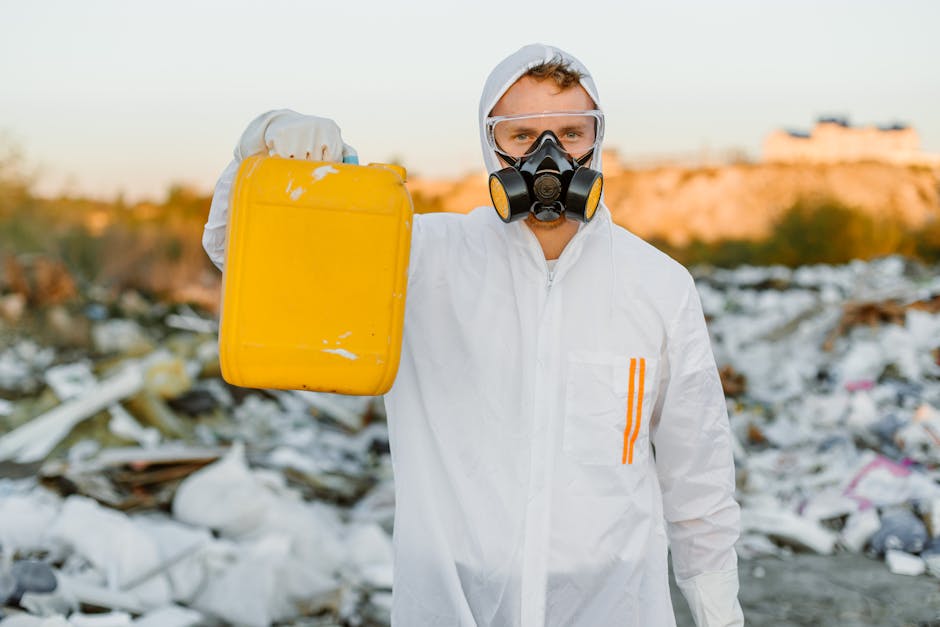
The level of protection depends on the job, but gloves are common, and more robust PPE may be used where dust, mould, splashes, or sharp items are involved. The goal is not to dress like a sci-fi film extra. It is simply to prevent contact and avoid transferring contamination to skin, clothes, or the vehicle.
4. Contain the waste securely
Professionals use strong bags, sealed containers, lined bins, or wrapped loads depending on the waste type. Bags are not overfilled. Wet waste is handled so it does not leak. Sharp items are isolated before bagging where possible. If a bag looks like it is about to fail, it is changed. Simple, but it matters.
5. Remove waste carefully through the property
The route out matters just as much as the removal itself. Teams try to keep waste away from clean surfaces, carpets, and busy family spaces. If contamination could spread, they may use protective coverings or carry items in a way that reduces drops and contact.
This is where experience shows. A good team moves slowly enough to stay in control, but not so slowly that the work becomes clumsy. There is a rhythm to it.
6. Load, transport, and separate appropriately
Waste should be loaded so that mixed contamination does not spread in transit. Heavier items go safely, liquids are secured, and sharp or fragile materials are isolated. In many cases, this is one reason professional removal works better than trying to do it yourself in the family car. A boot full of questionable bags is nobody's idea of a good afternoon.
7. Clean the affected area
Once the waste is removed, the area itself may need cleaning, sweeping, wiping, vacuuming with suitable equipment, or more thorough sanitation depending on the contamination. This step is often overlooked, which is a shame because it is what actually restores the space.
8. Dispose of waste through the right route
Finally, the waste is taken to the appropriate disposal or recovery route. Some items may be suitable for recycling or specialist processing, while others must go with general waste. The important thing is that they are not mixed casually just to make life easier in the moment.
Expert Tips for Better Results
Small choices make a big difference with contaminated waste. The professionals know this, and it is often the little habits that stop a job going sideways.
- Work from clean to dirty: Avoid walking contamination through cleaner areas. Start with the least messy items where possible.
- Keep a spare layer of bags: Wet or weakened bags can fail suddenly. Having replacements ready saves time.
- Don't mix "maybe contaminated" with normal waste: If you are not sure, separate it first. You can always reassess later.
- Protect the route out: Old sheets, cardboard, or covers can help protect hallways and stairs during removal.
- Watch for hidden liquid: A bag can seem fine until it is lifted. Then the drips start. Annoying, yes, but preventable.
- Use proper lifting technique: Contaminated waste is often heavy because of moisture. Back strain is not a bonus feature.
One overlooked detail is ventilation. Opening windows during and after removal can help with odours and stale air, especially in a closed flat or loft. It is not a cure-all, but it helps.
Another small but useful tip: take photos before and after if you are a landlord, agent, or family member coordinating the work. Not glamorous, but it can avoid misunderstandings later.
Common Mistakes to Avoid
Most problems with contaminated household waste come from rushing. That is usually the story. People want the mess gone quickly, so they skip steps that feel fussy until they have to re-clean everything.
- Using thin bags: They split under weight or from sharp edges.
- Overfilling containers: This makes lifting unsafe and increases spill risk.
- Mixing waste types: Sharp items, food waste, liquids, and soft furnishings should not all go together without thought.
- Ignoring hand and surface contamination: Gloves do not magically solve everything if you keep touching door handles, phones, and light switches.
- Skipping the clean-up stage: Removing waste without cleaning the area leaves the job half-done.
- Assuming all waste can go to the same place: Disposal needs to match the item, not just the inconvenience level.
There is also a human mistake worth mentioning: trying to do too much in one go. If the contamination is extensive, splitting the work into phases is often safer and calmer. No medals are handed out for trying to carry everything in a single heroic trip.
Tools, Resources and Recommendations
The right tools make a big difference when handling contaminated household waste. Professionals usually arrive with practical items that keep the job contained and the area protected.
- strong refuse sacks and liners
- heavy-duty gloves
- masks or respiratory protection where dust, mould, or odour is an issue
- protective overshoes or disposable coverings where appropriate
- tough tape for sealing containers or bundling items
- cleaning materials for the follow-up stage
- spill-absorbent materials where liquids are present
- carts or trolleys for awkward loads
For larger home clearances, a professional team may also coordinate broader services such as house clearance, home clearance, or waste clearance depending on what the property needs. That can be useful when contaminated items are mixed with bulky furniture or other household clutter.
If the main problem involves old bedding, mattresses, or fabric items, dedicated services such as mattress disposal and mattress collection can be a cleaner solution than trying to bundle everything into general waste. Same idea with sofas and heavy furniture: separating the job usually leads to a tidier result.
For households trying to keep more of the waste stream out of landfill where possible, recycling and sustainability is worth thinking about, although contaminated items are not always suitable for recycling. There is no point forcing a green label onto something that clearly needs a different route.
Law, Compliance, Standards, or Best Practice
When contaminated household waste is involved, professionals work within UK waste-handling expectations and general health-and-safety practice. The exact legal position depends on the waste type and setting, so it is best to treat this as a careful operational area rather than a casual DIY task.
In plain English, the important principles are:
- waste should be handled safely and not create a risk to people or property
- items should be separated where that reduces contamination or improves disposal
- special items should not be mixed into general rubbish if they need different handling
- staff or contractors should use suitable protective measures
- waste should go to an appropriate disposal route
In the UK, councils, private operators, landlords, and householders all have different responsibilities depending on the scenario. If waste includes sharps, hazardous residues, or items contaminated by bodily fluids or chemicals, extra care is needed. You do not need to memorise every regulation to see the principle: if an item could harm someone, it should be treated with caution.
Professional firms also typically carry out work in line with documented safety policies and insurance arrangements. For example, a responsible provider should be able to explain how they manage risk during loading, transport, and site clean-up. If a company seems vague about that, it is fair to ask more questions.
For service standards and trust signals, pages such as health and safety policy, insurance and safety, and about us can help you understand how a provider approaches the job. That does not replace legal advice, of course, but it does show whether the company takes safety seriously.
Options, Methods, or Comparison Table
There is no single "best" method for every contaminated household waste job. The right option depends on the type of contamination, the amount of waste, access to the property, and how quickly the space needs to be made safe again.
| Method | Best for | Pros | Limitations |
|---|---|---|---|
| DIY disposal | Very small, low-risk quantities | Cheap, immediate, straightforward | Higher exposure risk, easy to sort badly, limited disposal options |
| Council collection | Some bulky or general waste items | Useful for standard household items, sometimes cost-effective | Not ideal for mixed contamination or urgent removal, rules vary by area |
| Professional waste removal | Mixed, bulky, or awkward contaminated items | Safer handling, better sorting, faster clearance, cleaner finish | Higher upfront cost than DIY |
| Specialist clearance | Severe contamination, hoarding, or bio-risk concerns | Most controlled approach, usually includes clean-up planning | Requires more coordination and may take longer |
For many households, professional removal is the practical middle ground. It gives you a safer process without the delay of trying to piece everything together yourself. If the job is light and simple, a council option may be fine. If it is mixed or potentially contaminated, a more structured removal is usually the better call.
Case Study or Real-World Example
Here is a realistic example. A small London flat has been left with a mix of damp cardboard, food-contaminated packaging, a broken bedside drawer, and a bag of soft items that have picked up odour from a leak. Nothing sounds dramatic on its own, but together it is messy, unpleasant, and awkward to move through a narrow stairwell.
A professional team would usually start by checking which items are salvageable, then separate the wet cardboard, fabric items, and broken furniture. They would seal contaminated waste in strong bags, remove the bulky items in manageable pieces, and keep the route through the stairwell as clean as possible. If the floor or skirting has picked up residue, they would clean that before leaving.
The difference you notice is not just that the flat is emptier. It is that the space feels reset. The smell is reduced, the route is clean, and the next person coming in does not have to tiptoe around uncertainty. That matters a lot in shared buildings, where one sloppy removal can affect neighbours too.
In our experience, the calmest jobs are the best jobs. Nothing fancy. Just careful steps, good bags, and no surprises.
Practical Checklist
Use this checklist before handling contaminated household waste or arranging a collection.
- Identify what makes the waste contaminated: liquid, mould, pests, sharps, chemicals, or bodily fluids
- Separate contaminated items from normal household rubbish
- Check whether any item needs special handling or should not be touched directly
- Gather strong bags, gloves, and basic cleaning materials
- Plan the removal route to avoid spreading contamination
- Keep children, pets, and bystanders away from the area
- Do not overfill bags or boxes
- Clean the affected surface area after removal
- Dispose of items through the correct route, not just the nearest bin
- Ask for professional help if the waste is large, sharp, wet, or uncertain
If you work through those points one by one, the job becomes far more manageable. Not always pleasant, admittedly. But manageable.
Conclusion
How professionals handle contaminated household waste safely comes down to one thing: controlled removal with the right level of care. They assess the risk, separate the waste, contain it properly, protect the route through the property, and clean up the space so the problem does not linger.
For homeowners, landlords, and families, the real value is peace of mind. You are not guessing. You are not making the mess worse. You are dealing with the problem in a way that protects people and leaves the home in better shape than before.
If you are facing a difficult clear-out, a mixed waste job, or a property that needs careful handling, choosing a method that puts safety first is rarely the wrong move. Small steps, done properly, have a way of making a stubborn job feel a lot lighter.
Get a free quote today and see how much you can save.
Frequently Asked Questions
What counts as contaminated household waste?
It usually includes household items that are dirty, wet, mouldy, pest-affected, chemically contaminated, sharp, or potentially exposed to bodily fluids. The exact level of risk depends on the item, but if it could spread dirt, odour, or harm during handling, treat it carefully.
Can I put contaminated waste in normal bin bags?
Sometimes small quantities can be bagged securely, but not every contaminated item belongs in the regular bin. Thin bags tear easily, and mixed contamination can create a mess. Strong bags and proper separation are much safer.
Do professionals always use special equipment?
Not always, but they do use the right equipment for the job. That might mean heavy-duty gloves, masks, sealed containers, or cleaning tools depending on the waste type. The point is matching protection to risk, not overdoing it.
Is mouldy household waste dangerous?
It can be, especially if the mould is extensive or the items are dry and dusty. Some people react more strongly than others. Professionals avoid stirring it up and often work with ventilation and containment in mind.
What should I do if I find sharps in household waste?
Do not pick them up bare-handed. Keep children and pets away, and use proper containment if you are trained and it is safe to do so. If there is any doubt, it is usually better to get professional help.
How do professionals stop contamination spreading through the house?
They plan the route out, use secure containment, avoid overfilling bags, and keep contaminated waste separate from clean surfaces. A careful exit route is just as important as the removal itself.
Can contaminated waste be recycled?
Sometimes, but not always. If the contamination affects the material or creates a hygiene risk, recycling may not be appropriate. Clean separation is important because contaminated items often need a different disposal route.
How much does professional contaminated waste removal cost?
It varies depending on the volume, access, waste type, and clean-up needed. Jobs involving awkward access, heavy items, or extra cleaning usually cost more than a straightforward collection. A proper quote is the sensible way to judge it.
Is it better to use a council collection or a private removal service?
For some standard bulky waste, a council service may work well. For mixed, contaminated, urgent, or difficult items, a private removal service is often more practical because the handling is more flexible and tailored.
What if the waste smells bad but does not look dangerous?
Odour is a warning sign worth taking seriously. It may come from food waste, damp materials, or hidden contamination. Even if it looks harmless, the smell suggests the waste should be handled carefully.
How quickly should contaminated household waste be removed?
As quickly as practical, especially if there is odour, leakage, pests, or hygiene risk. The longer it sits, the more likely the problem spreads. That said, speed should never come before safe handling.
What is the safest first step if I am unsure what I am dealing with?
Stop and assess the item before moving it. If it is wet, sharp, mouldy, or suspicious, separate it from the rest and avoid touching it directly. If you still are not sure, bring in a professional who handles this sort of waste regularly.