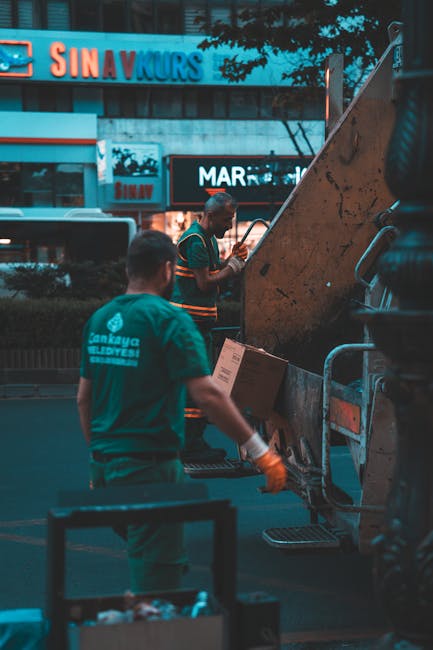
What to know before hiring a rubbish company to avoid scams
If you have ever needed a fast clear-out, you will know the pressure. The pile is staring at you, the deadline is close, and the first company that sounds friendly can feel like a lifeline. But that is exactly when people get caught out. What to know before hiring a rubbish company to avoid scams is not just about saving money; it is about avoiding fly-tipping, hidden fees, awkward last-minute excuses, and the kind of stress that ruins a perfectly ordinary day.
In the UK, there are plenty of honest waste removal firms. There are also a few that rely on vague quotes, cash-only pressure, or a suspicious lack of paperwork. The good news? Once you know what to check, the whole process gets much easier. This guide walks you through the warning signs, the right questions, the basics of compliance, and how to choose a rubbish company with confidence. No fluff. Just the practical stuff that actually helps.
Expert summary: A legitimate rubbish company should be clear about pricing, explain what happens to your waste, show evidence of insurance and licensing where relevant, and answer questions without getting defensive. If something feels rushed or oddly secretive, slow it down.
- You should know how quotes are built before anyone arrives.
- You should understand what documents a reputable operator can provide.
- You should be able to compare services without guessing what is included.
Table of Contents
- Why this matters
- How the process works
- Key benefits and practical advantages
- Who this is for and when it makes sense
- Step-by-step guidance
- Expert tips for better results
- Common mistakes to avoid
- Tools, resources and recommendations
- Law, compliance, standards and best practice
- Options, methods and comparison
- Case study or real-world example
- Practical checklist
- Conclusion
- Frequently asked questions
Why What to know before hiring a rubbish company to avoid scams Matters
Let's face it: waste removal is rarely exciting. It usually appears when you are dealing with something slightly annoying already. A sofa that will not fit down the stairwell. A garage full of boxes. A house clear-out after years of "I'll deal with that later." That is why scammy operators do so well. People want the job done quickly, and bad actors know it.
The risks are not only financial. A dodgy operator can leave you with a messy driveway, damage to your property, or waste that ends up dumped somewhere illegal. And if the waste is traced back to you, even indirectly, the headache can become much bigger than the original clear-out. Nobody wants a knock on the door because a van disappeared into the evening with your old furniture and a dodgy story.
There is also the issue of trust. A proper rubbish company should make the process feel simple, not vague. You should know who is coming, what they are taking, what it will cost, and what happens next. When that information is hard to get, that is your cue to pause.
For anyone comparing options in London or nearby areas, this matters even more. Busy streets, flats with tricky access, controlled parking, and tight time windows make clear communication essential. A company that handles those details well is usually the kind of company you can trust with the rest too.
How What to know before hiring a rubbish company to avoid scams Works
Hiring a waste removal company should follow a straightforward pattern: you describe the job, receive a quote, agree the terms, and book a collection. In practice, the difference between a trustworthy service and a scam often shows up in the details. Honest firms explain the scope clearly. Problem firms keep it vague until they have your waste on the truck, then the price mysteriously changes. Funny how that happens.
A legitimate operator will usually ask for a description of the items, access details, and any awkward bits such as stairs, parking, heavy lifting, or restricted entry. That is not just fussing. It helps them quote properly. The more professional firms may ask for photos or offer an on-site assessment for larger clearances. That is a good sign, not an inconvenience.
Scams often follow a pattern. The quote is unusually low. The caller is vague about licensing or disposal. The van arrives without proper identification. Once the waste is loaded, the price jumps because of "unexpected" weight, labour, or disposal charges. In some cases, payment is demanded in cash only, and the paper trail disappears. If you feel pushed, you are probably being pushed for a reason.
One useful way to think about the process is this: a proper rubbish company is selling a service, not just a truck. That service includes assessment, loading, transport, disposal, recycling where possible, and basic accountability. If those pieces are missing from the conversation, keep asking questions.
Key Benefits and Practical Advantages
Choosing carefully does more than protect your wallet. It makes the whole job calmer and cleaner. When the right company is involved, you save time, reduce risk, and avoid the unpleasant surprise of having to "sort things out later." Which, to be fair, is never anyone's favourite sentence.
- Predictable pricing: Clear quotes help you budget before the work starts.
- Lower risk of disputes: Proper terms reduce arguments over weight, access, or additional labour.
- Better disposal practices: A reputable firm is more likely to handle waste responsibly and separate recyclable items where possible.
- Less stress on collection day: You know when they are coming and what to expect.
- Protection for your property: Careful handlers are less likely to scratch walls, dent doors, or leave debris behind.
There is also a broader practical benefit: good operators often work faster because they are organised. They know how to assess a job, bring the right number of people, and avoid the stop-start chaos that happens when someone underestimates the workload. That can be the difference between a clean Saturday morning and a half-finished job stretching into the afternoon.
If you are clearing a rental property, preparing a sale, or just trying to get your life back into a manageable shape, that reliability matters. Truth be told, most people do not mind paying a fair price. They mind feeling tricked.
Who This Is For and When It Makes Sense
This guide is useful for anyone booking rubbish removal, but it is especially relevant if you are dealing with bulky or mixed waste, short deadlines, or items that are awkward to move. A quick mattress pickup is one thing. A full flat clearance, garage clearance, or a few rooms' worth of clutter is another. The larger the job, the more room there is for confusion, and the more important it is to check the basics.
It also makes sense if you are comparing rubbish companies for the first time. First-time customers are often the easiest to mislead because they do not know what a normal quote looks like. If a provider says yes to everything without asking any questions, that can sound helpful. Sometimes it is. Sometimes it is just lazy sales. You want substance, not charm.
Common situations where careful vetting helps:
- End-of-tenancy clear-outs
- House, loft, or garage clearances
- Furniture, sofa, or mattress disposal
- Builder's waste after home improvements
- Business or office waste removal
- Mixed rubbish where sorting and disposal matter
If you are in a busy area such as central London, west London, or around tight residential streets, this is even more useful because access problems can easily become hidden extras. A professional should talk through those before the van arrives.
Step-by-Step Guidance
Here is the simplest way to avoid most scams without making the process complicated.
- Describe the job clearly. List the items, approximate volume, access issues, and whether anything is unusually heavy or awkward.
- Ask what is included. Make sure the quote covers labour, loading, transport, disposal, and any additional charges that could apply.
- Check how the company prices the work. Some charge by load size, some by item, and some by time. The method should be explained in plain English.
- Request proof of insurance and relevant waste-handling credentials. You do not need a lecture; you do need reassurance.
- Look for a real business identity. A proper website, fixed contact details, clear terms, and an address or service area all help build trust.
- Read the small print. Cancellation terms, payment timing, and access requirements are easy to ignore until they become expensive.
- Compare at least two or three quotes. One quote alone tells you very little. A couple of comparisons usually reveal who is realistic and who is winging it.
- Confirm the booking in writing. Even a short email or message helps avoid confusion later.
That is the basic framework. Not glamorous, but effective. If a company refuses to answer one of those steps, or they act irritated by normal questions, that is useful information in itself.
A small but important detail: ask what happens if the load changes on the day. Sometimes extra items do appear. Life happens. But the company should explain how additional charges are decided, not spring them on you like a trapdoor.
Expert Tips for Better Results
After seeing plenty of quotes and customer bookings over time, a few patterns stand out. The strongest operators are usually not the flashiest ones. They are the ones that are boring in the best possible way: consistent, clear, and slightly unexciting. In this context, boring is beautiful.
Tip 1: Treat very cheap quotes with caution
If a quote is far below the others, ask why. It might be a genuine limited-scope offer, but it could also mean exclusions, weak disposal practices, or a plan to add fees later. A low price is only a bargain if the final bill stays low too.
Tip 2: Watch for pressure language
Phrases like "today only," "cash now," or "we have to load it before confirming price" are not automatically dishonest, but they deserve scrutiny. A professional company should be able to stand behind its terms without acting like you are booking a train ticket in a storm.
Tip 3: Ask about sorting and recycling
Good operators usually know what can be separated for reuse, recycling, or specialist disposal. You do not need a sustainability lecture, but you do want to know that your waste will not be handled carelessly. If the company also talks about recycling and sustainability, that is often a reassuring sign.
If you are clearing bulky household items, it may also be worth checking whether one item can be collected through a more suitable service. For example, some people compare a general rubbish removal visit with a dedicated bulky waste collection or council large item collection. The right choice depends on urgency, item type, access, and whether you need help carrying everything from the property.
Tip 4: Photograph the waste before collection
This is simple and very handy. Photos create a record of what was agreed, especially if the job involves several rooms or a mixture of furniture, bags, and loose items. A quick phone snapshot before the van arrives can save a lot of "that was not included" nonsense later.
Tip 5: Trust your read on the conversation
If the person on the phone is patient, direct, and happy to explain things twice, that is a good sign. If they dodge specific questions, talk over you, or seem irritated by basic checks, listen to that feeling. You do not need to make a dramatic scene. Just move on.
Common Mistakes to Avoid
Most people who get caught out do not do anything wildly foolish. They simply skip the boring checks because they are busy. That is human. Still, a few mistakes come up again and again.
- Booking on price alone: Cheap is not always cheap once extras appear.
- Not confirming what is included: Labour, parking, disposal, and access can all affect the final price.
- Ignoring company details: If there is no clear business identity, be careful.
- Assuming every waste collector operates the same way: Some specialise in domestic items, some in business waste removal, and some in larger clearances.
- Skipping written confirmation: A message or email is a simple safeguard.
- Not asking where the waste goes: You do not need the route map, but you should know the company has a legitimate disposal plan.
- Leaving everything until the last minute: Rush jobs make people vulnerable to bad deals.
One especially common mistake is not thinking about access. A company may quote for a straightforward kerbside pickup, then discover there are four flights of stairs, no lift, and a narrow corridor with a sharp corner. That is not always a scam. Sometimes it is just poor preparation on both sides. But clear access details at the start prevent that awkward moment where everyone pretends not to hear the price being adjusted.
Tools, Resources and Recommendations
You do not need specialist equipment to choose well, but a few simple tools make the process smoother.
- Your phone camera: Take pictures of the waste, access points, and anything fragile nearby.
- Notes app: Keep the quote details, dates, and names together so you can compare properly.
- Measuring tape: Useful for bulky items such as sofas, wardrobes, or mattresses if the space is tight.
- Photo ID of the access area or parking restrictions: Handy in flats or busy streets where timing matters.
- Company policy pages: Look for pages such as pricing and quotes, payment and security, insurance and safety, and complaints procedure. These help show how the business operates.
On this website, pages like pricing and quotes, insurance and safety, and payment and security are the kinds of places where a careful reader can check how a provider presents its terms. That sort of transparency is worth its weight in, well, rubbish bags.
If you are sorting through mixed household waste beforehand, a quick pre-pickup checklist can help you separate what should be kept, donated, recycled, or removed. It is a tiny bit of effort that often saves money and avoids last-minute misunderstandings.
Law, Compliance, Standards, or Best Practice
Waste disposal in the UK is not something to treat casually. You do not need to become a legal expert, but you should know the broad principles. A legitimate waste carrier should be able to explain how waste is handled, where it goes, and what happens to recyclable material. If a company seems unsure, dismissive, or secretive, that is a concern.
There is also a practical duty on the customer: do not hand waste to someone who looks untraceable or who cannot explain their process. If waste is fly-tipped, poor record-keeping can become a problem for everyone involved. That is why paperwork, receipts, and company details matter more than many people realise.
Best practice usually includes:
- Clear written quotes and terms
- Transparent pricing before collection
- Appropriate insurance for loading and transport
- Respect for health and safety during lifting and removal
- Responsible recycling or disposal routes where suitable
- A complaints route if something goes wrong
For larger or more sensitive clearances, it is sensible to choose a company with a visible health and safety policy and a straightforward complaints procedure. That does not guarantee perfection, of course. But it does show the business has thought about how it handles real-world problems, which is more than some do.
If you are disposing of items like fridges, mattresses, white goods, or bulky furniture, ask whether the company handles those items routinely. Certain materials can need different handling, and a proper operator should say so clearly.
Options, Methods, or Comparison Table
There is no single right way to get rid of waste. The best route depends on speed, volume, item type, and how much help you need carrying things. Here is a simple comparison.
| Option | Best for | Pros | Watch out for |
|---|---|---|---|
| Private rubbish company | Fast clear-outs, mixed waste, bulky items | Convenient, flexible, often same-day | Quotes can vary; check credentials and inclusions |
| Council collection | Standard domestic waste or single bulky items | Often familiar and structured | May need booking lead time; item rules can be strict |
| Self-managed disposal | Small loads with time and transport available | Potentially lower direct cost | Requires your own effort, vehicle, and sorting |
| Specialist item collection | Items like sofas, mattresses, fridges, or white goods | Suitable handling for specific items | May need item-specific terms or preparation |
If your main priority is avoiding scams, the private company route is perfectly safe as long as you vet the provider properly. The council route can feel simpler for some single-item jobs, while specialist collections can be useful when the item itself creates disposal complications. The smartest choice is the one that matches the job instead of forcing the job to fit the first advert you saw.
Case Study or Real-World Example
A typical example: a family in south-west London needed a garage cleared before a house sale. The space was full of broken shelving, old paint tins, boxed clutter, and a heavy sofa that had clearly seen better days. They contacted two companies. One gave a very fast quote but barely asked any questions. The other asked for photos, access details, and whether the paint tins were full or empty. Guess which one turned out to be more reliable?
The cheaper quote looked appealing at first. But when the team arrived, they were vague about disposal, hesitant about the heavier items, and keen to raise the price because of "unexpected" volume. The family walked away and chose the more detailed provider. That company arrived on time, explained what could be loaded safely, kept the price aligned with the original discussion, and cleared the garage without drama.
Nothing magical happened. Just good process. The more careful company asked better questions, and those questions protected the customer. That is usually how trust works in this trade. Not with big promises. With details.
In another everyday scenario, someone booking a mattress disposal may assume any van service is fine. But mattress removal can involve lifting, hygiene considerations, and proper disposal routes. A reputable company will talk about that plainly. A poor one may try to bundle it into a vague "man and van" promise and hope nobody notices until the invoice lands. Spoiler: people usually notice.
Practical Checklist
Use this before you book. It is quick, but it catches a lot of problems.
- Have I described the waste clearly and honestly?
- Have I shared access details, including stairs, parking, and any restrictions?
- Did I receive a written quote or message confirmation?
- Do I know what is included in the price?
- Have I asked about extra charges for labour, access, or extra items?
- Does the company have a clear business identity and contact details?
- Have I checked for insurance, safety, and waste-handling information?
- Do I understand the payment method and timing?
- Have I compared at least one alternative quote?
- Have I kept photos of the waste and agreed terms?
If you can answer yes to most of those, you are in a much stronger position. If several are no, slow down. There is no prize for booking the first offer on the table.
Conclusion
What to know before hiring a rubbish company to avoid scams comes down to a simple idea: clarity beats pressure every time. A trustworthy provider explains the process, gives you a proper quote, answers questions without fuss, and handles the waste in a way that makes sense. A dodgy one relies on urgency, vagueness, and small print nobody saw coming.
If you remember only three things, make them these: compare a few quotes, get everything confirmed in writing, and trust your instincts when the conversation feels off. That is usually enough to avoid most problems and choose a rubbish company you can actually rely on.
Get a free quote today and see how much you can save.
And if you are still weighing up the best route for your job, take your time. A calm decision now is a much nicer thing than a messy surprise later.
Frequently Asked Questions
How do I know if a rubbish company is legitimate?
Look for clear contact details, a proper written quote, transparent pricing, and straightforward answers to your questions. A legitimate company should be comfortable explaining what is included, how waste is handled, and what happens if the job changes on the day.
What are the biggest red flags when hiring a rubbish company?
The biggest red flags are vague pricing, cash-only pressure, refusal to put terms in writing, no explanation of disposal methods, and a strange reluctance to answer basic questions. If the whole thing feels rushed, that is worth taking seriously.
Should a rubbish company ask me for photos before quoting?
Often, yes. Photos help the company understand volume, access, and awkward items. It is especially useful for larger clearances or properties with stairs, narrow hallways, or limited parking. It is a practical check, not a nuisance.
Why is a very cheap quote sometimes a bad sign?
A very cheap quote can be a real bargain, but it can also hide exclusions or lead to extra charges later. If one price is far below the rest, ask what is missing. A proper company should be able to explain the difference clearly.
Do I need to check insurance before booking?
Yes, where possible. Insurance matters because waste removal involves lifting, carrying, and moving items through your property. If something gets damaged, you want to know the company has appropriate cover and a sensible process for handling problems.
What should be included in a rubbish removal quote?
A good quote should explain labour, transport, disposal, any item restrictions, and likely extra charges. If access, parking, or heavy items could change the price, that should be made clear before the booking is confirmed.
Is it better to use a council collection or a private rubbish company?
It depends on the job. Council collections can suit standard domestic items and simpler bookings. A private rubbish company may be better for speed, bulky waste, mixed loads, or access-heavy clear-outs. The right choice depends on urgency and convenience.
What happens if the load is bigger than expected?
That should be discussed before collection. Some companies charge by volume or by agreed load size, while others may adjust the price if the job genuinely changes. The important thing is that the method is explained in advance, not invented on arrival.
Can I ask where my waste will go?
Absolutely. You do not need every detail, but you should expect a clear explanation of disposal or recycling routes. A trustworthy company should be comfortable talking about how it handles waste responsibly.
How far in advance should I book a rubbish company?
For simple jobs, you may be able to book quickly. For bigger clear-outs, weekends, or busy London areas, earlier is better. Booking ahead gives you time to compare quotes and avoid last-minute pressure.
What questions should I ask before hiring a rubbish company?
Ask what is included, how the quote is calculated, whether there are extra charges, what payment methods are accepted, and what happens if the job changes. If relevant, ask about insurance, recycling, and access requirements too.
What should I do if a rubbish company tries to add charges on arrival?
Stay calm, ask them to explain the difference from the original quote, and check whether the new charge was discussed beforehand. If it was not, do not feel rushed into agreeing without understanding it. A written record helps a lot here.